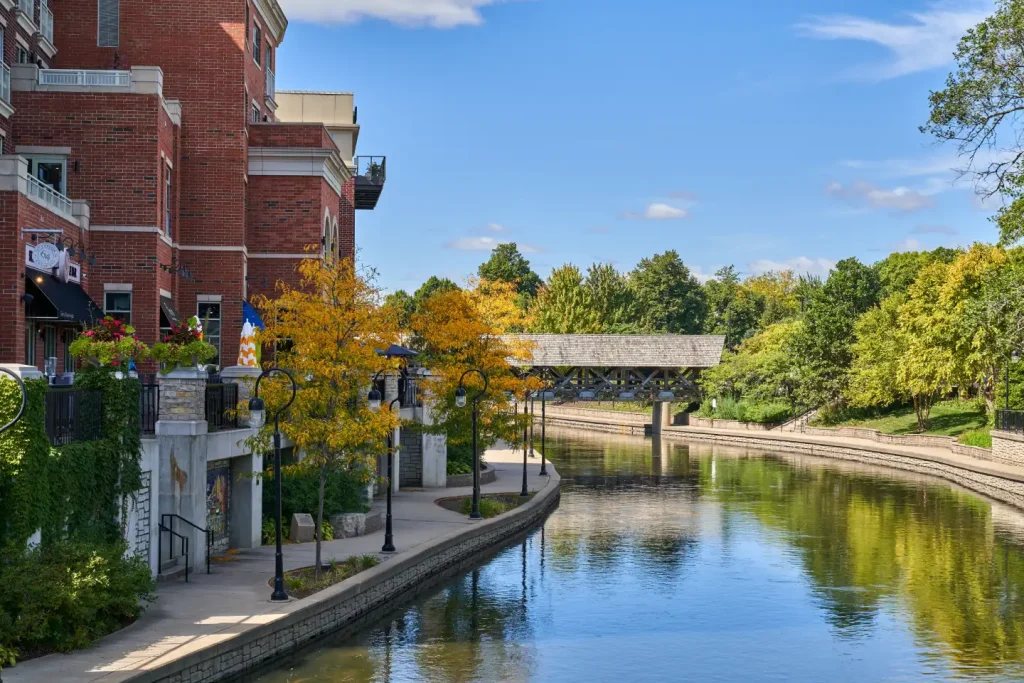
A riverwalk through the middle of downtown, two of the most sought-after school districts in Illinois, and a city large enough to have real neighborhoods. Naperville is the benchmark other suburbs get measured against.
At a glance
Founded in 1831 and now the fourth-largest city in Illinois, with a nine-mile paved Riverwalk, a living-history museum, and a downtown that stays busy on a weeknight.
A landscaped path along the DuPage River through the center of downtown — brick paths, covered bridges, fountains and Centennial Beach at one end.
Two large, consistently high-performing districts split the city. Which one an address feeds into is one of the first questions buyers ask.
Several hundred shops and restaurants across a walkable grid, plus Naper Settlement and the Community Concert Center.
The main Naperville station and the Route 59 stop both sit on the BNSF line, serving opposite ends of a large city.
Living here
The Riverwalk runs through the middle of downtown and most weekends start somewhere along it — then spread out to whichever end of town you live on, because Naperville is big enough that those feel like different places.
A quarry converted into a swimming beach in 1931, with a sand bottom and a deep end. Generations of families here have summer memberships.
Thirteen acres of living history in the middle of downtown, with costumed interpreters and a working nineteenth-century city.
The Naperville Public Library has repeatedly ranked among the top-rated systems of its size in the country.
The Riverwalk connects into the DuPage River Trail and a network of paths that let you cross most of the city without a road.
Homes for sale
Updated straight from the MLS. Filter by price, beds or neighborhood, and set an alert so you hear about a new listing the morning it goes live.
Optima IDX embed slot
Neighborhoods
Naperville is large enough that neighborhoods behave like separate towns. Here’s how we’d describe each one to someone who has never driven them.
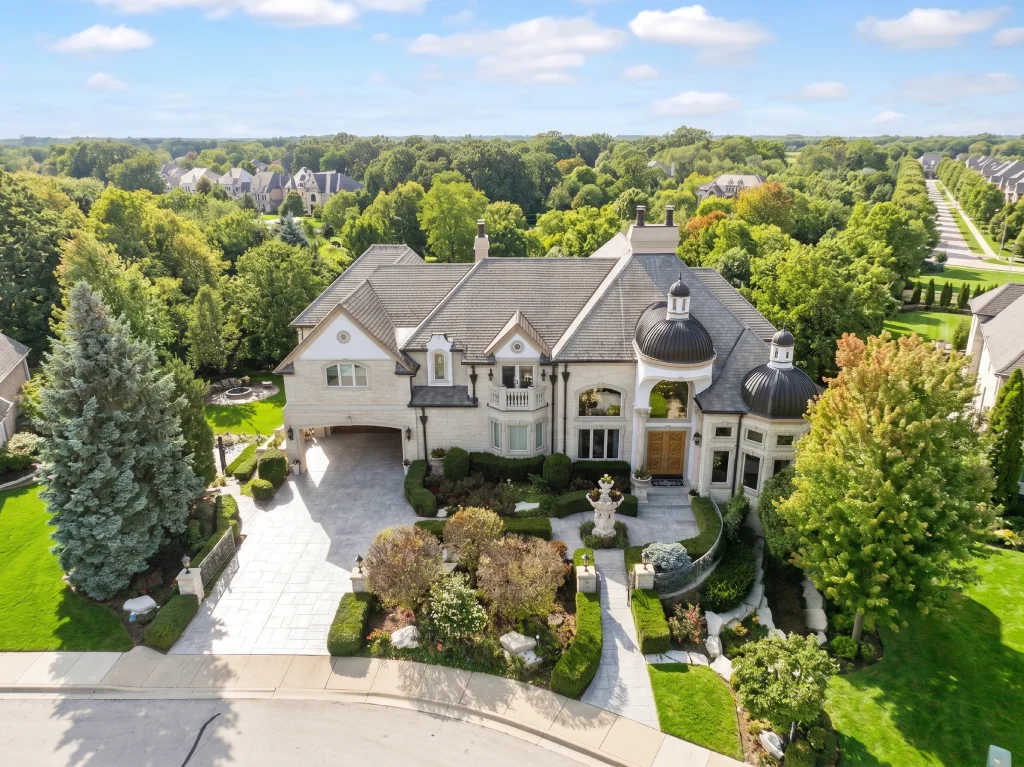
The blocks around downtown and Naper Settlement. Victorians and early Colonials, brick streets, and the shortest walk to the Riverwalk. The most expensive address in the city.
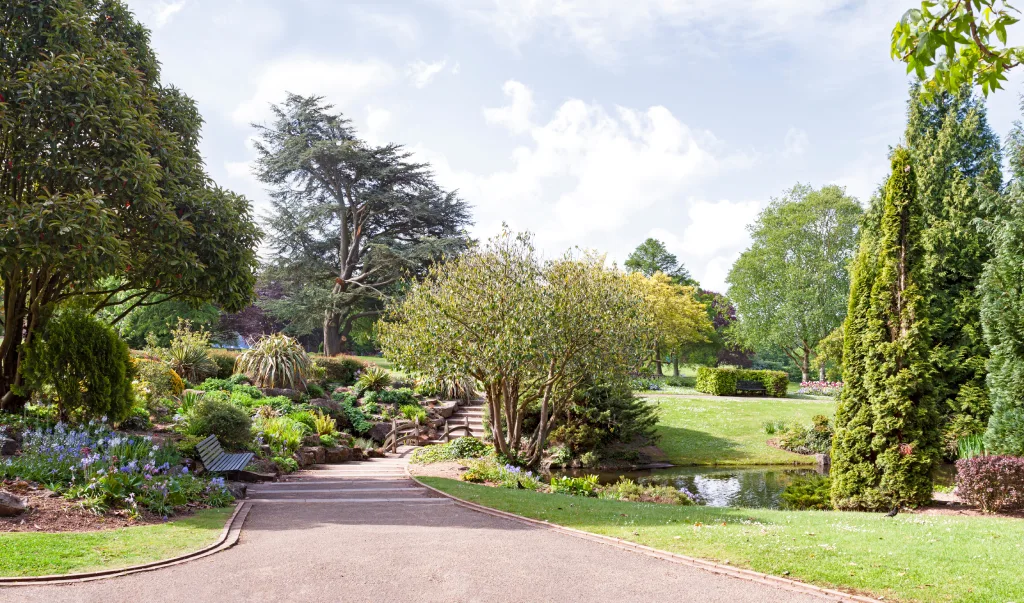
Cress Creek and the streets north of Ogden. Mature trees, larger lots, golf, and established District 203 schools. Where move-up buyers land.
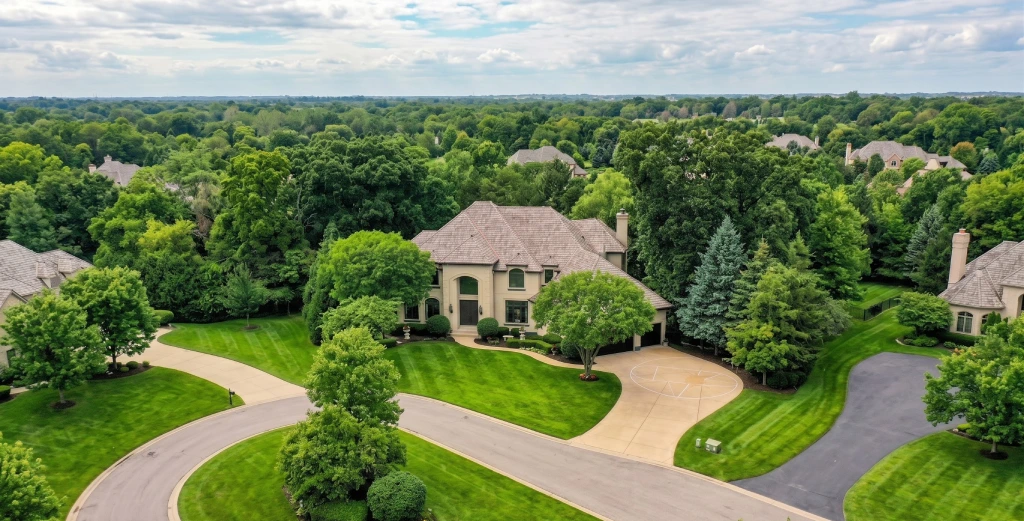
Below 75th toward Route 59 — Ashbury, Tall Grass, White Eagle. Newer construction, larger square footage, and District 204 schools.
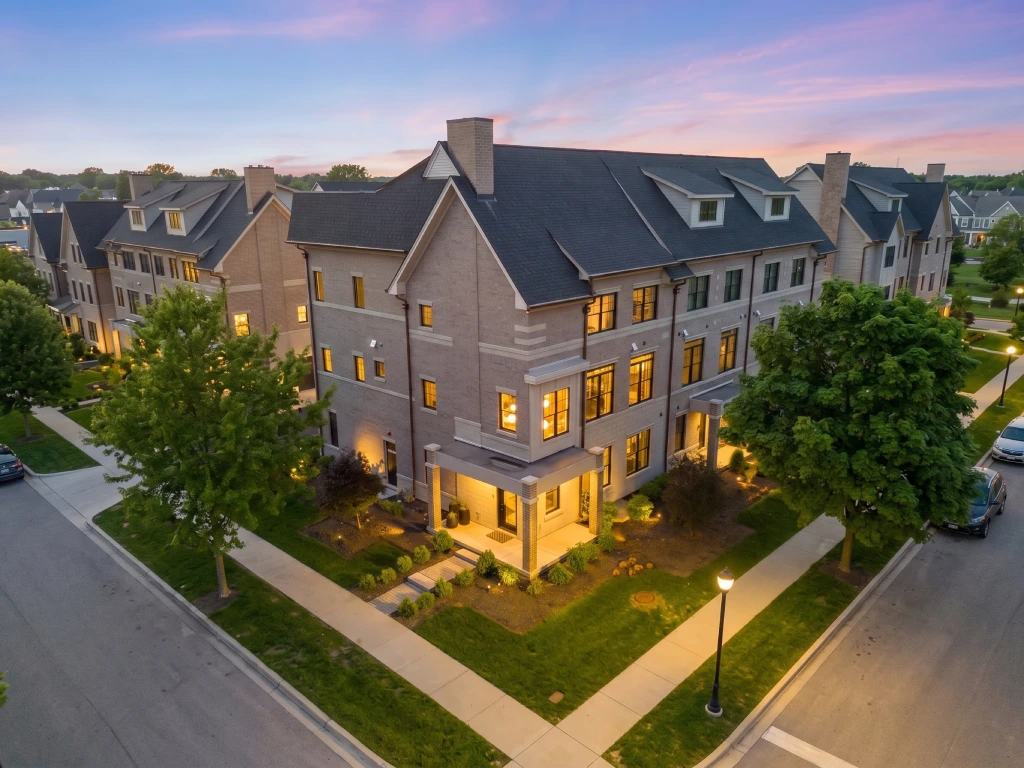
The western edge near the second Metra station. Townhouses and newer single-family at the most attainable prices in the city.
Schools & commute
Two K–12 districts split the city, and buyers ask which one before they ask about the kitchen. The boundary follows neither a road nor the river in any predictable way. Send us an address and we’ll tell you.
School assignments and boundaries change. Confirm any attendance area directly with the district before you write an offer.
Covers the northern and central city, including Naperville Central and Naperville North high schools.
Serves the south and west, feeding Neuqua Valley, Waubonsie Valley and Metea Valley high schools.
The two District 203 high schools, both long-established and consistently well regarded statewide.
The main station just north of downtown, with express service and a large commuter parking operation.
One of the busiest boarding stations on the entire Metra system, serving the western neighborhoods.
Common questions
The questions we field most from people looking at this city. Something missing? Ask us and we’ll add it.
Both are large, well-regarded districts, and the split is geographic rather than a quality ranking. District 203 covers the older northern and central city and feeds Naperville Central and North. District 204 covers the newer south and west and feeds Neuqua Valley, Waubonsie Valley and Metea Valley. Housing stock differs more than outcomes do — 203 skews older and closer to downtown, 204 newer and larger.
It is a city of well over a hundred thousand people, and it does not feel like a city. What it has instead is distinct neighborhoods, an unusually strong downtown, and park and trail coverage that keeps most of it feeling residential. Buyers wanting small-town scale often prefer Lemont or Palos Park.
Naperville spans DuPage and Will counties, and your bill depends on which county, which school district and which municipal boundaries an address falls into. The rate is meaningful here because home values are high. We pull the actual tax bill for every property we show rather than estimating from the price.
From the Historic District and the streets immediately around it, yes. From most of the rest of the city, no — Naperville is large, and downtown is a short drive or a trail ride rather than a walk. If walking downtown matters to you, that narrows the search considerably and raises the budget.
Mostly in the south and west, where land was still available into the 2000s, plus teardown rebuilds closer to downtown. If you want a new build near the Riverwalk, expect to buy an older house and replace it, which is common here and worth budgeting properly.
Both Metra stations sit on the BNSF line with frequent peak service, and Route 59 is among the busiest boarding stations on the system. Driving I-88 or the Reagan is the alternative and varies widely by hour. Check current Metra timetables for your own departure window.
Yes — townhouses and condos downtown and along the Route 59 corridor, plus ranch homes in the older northern neighborhoods. Downtown units are in real demand from empty nesters who want to keep the city and lose the yard, so they move quickly when priced correctly.